


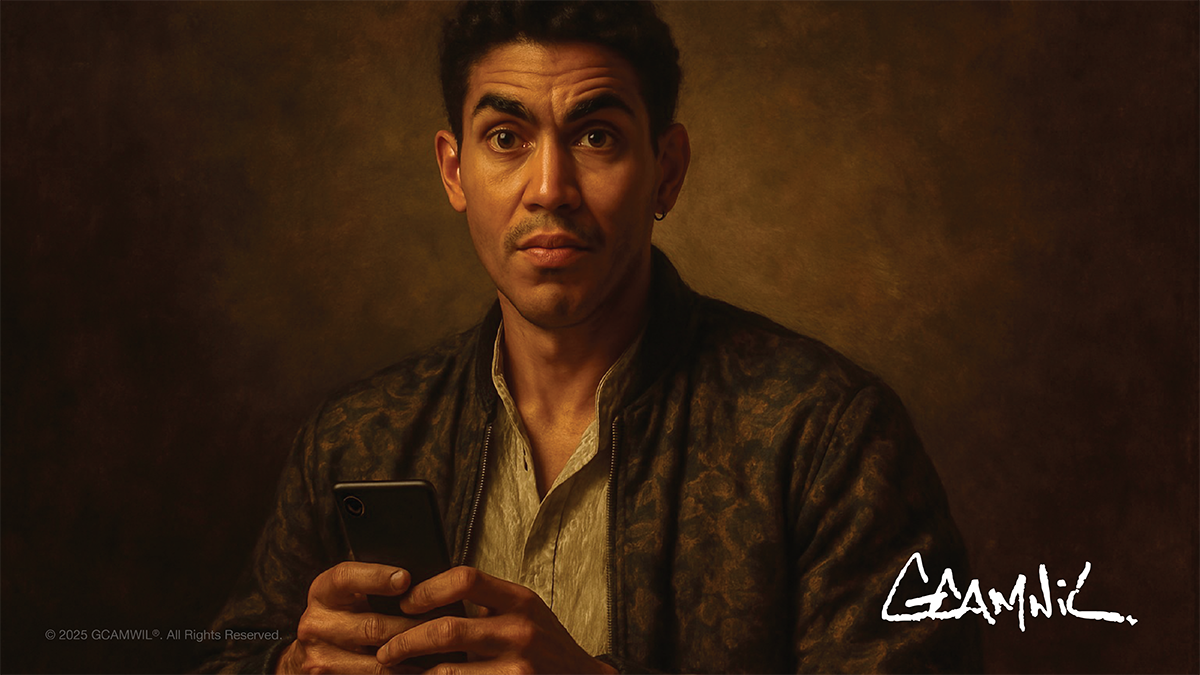
Every philosophy eventually reaches a point where it must leave the page and enter a human life.
We have spent much of this essay looking outward: first at a historical transition, then at the assumptions through which we interpret it.
But understanding eventually encounters a more difficult question.
What does any of this ask of me?
We can understand a changing world without changing very much ourselves. We can recognize new possibilities, reconsider old assumptions, and become more capable without becoming more deliberate about what we do with that capability.
Integration begins when the distance between what we understand and how we live becomes harder to ignore.
This is where the idea of the builder becomes useful.
Building isn’t limited to companies, products, or physical things. An artist can build culture. A teacher can build capability. A parent can build a family. A writer can build understanding. People build relationships, organizations, communities, bodies of knowledge, and ways of living.
The forms differ.
The posture is similar.
To build is to participate deliberately in shaping something that did not exist in quite the same form before you arrived.
The Digital Renaissance expands our capacity for that participation.
But greater capacity doesn’t tell us what deserves to be built.
For that, we have to look at the builder.
Identity Before Strategy
Modern culture gives us an extraordinary amount of strategy.
There are strategies for becoming more productive, building businesses, growing audiences, developing influence, learning faster, using technology, and positioning ourselves for opportunity. Much of that advice can be useful.
But strategy doesn’t arrive in the world by itself.
A person applies it.
Two people can possess the same information, use the same technology, follow the same playbook, and build profoundly different things.
Their judgment matters.
Their motives matter.
Their standards matter.
Their character matters.
I came to understand this slowly in my own life.
For years, I thought primarily in terms of what I was doing. I was an artist, then a designer, marketer, entrepreneur, educator, writer. Each new form of work seemed to introduce another strategy, another set of skills, another way of describing myself.
Eventually, trying to find the correct category became less interesting than understanding the person capable of holding those different dimensions together.
The question changed.
Instead of beginning with What should I build? I found myself asking:
Who do I need to become to build it well?
That question has proven more durable.
Strategies change.
Technologies change. Markets change. Careers change. Circumstances change. Even our ambitions change as experience teaches us to value different things.
And we change too.
Identity isn’t a finished answer we discover once and then defend forever. We develop through what we attempt, what we learn, what fails, what we practice, who we love, what we become responsible for, and what experience gradually teaches us about ourselves.
Sometimes becoming requires allowing an earlier version of ourselves to become incomplete.
That doesn’t mean we have to know exactly who we are before we act.
Often, acting is how we find out.
Identity before strategy means something simpler: external strategy cannot substitute for internal development.
Methods can help us decide how to do something.
They cannot decide what deserves doing in the first place.
That distinction becomes more important as strategy itself becomes easier to access. Increasingly capable technologies can help us analyze, plan, communicate, create, and execute.
But they cannot remove the person directing them.
The more capable the tools become, the more consequential that person’s judgment becomes.
And eventually, judgment raises another question.
Not only:
What can I do?
But:
What am I responsible for caring for well?
Stewardship
For much of my life, progress was closely connected to achievement.
What could I create?
What could I accomplish?
What could I build?
Those questions still matter to me. Ambition, curiosity, discipline, and the desire to make something meaningful remain important parts of my life.
But achievement eventually became an incomplete way of understanding progress.
I began asking a different question.
What am I responsible for caring for well?
I eventually found a word for that shift:
Stewardship.
Ownership asks what is mine.
Stewardship asks what my relationship to it requires of me.
Owning something gives us the ability to direct it. Stewardship asks what responsible direction actually looks like.
That can apply to material things, but it reaches much further.
A capability can be developed or neglected.
Knowledge can be preserved, deepened, and shared.
A relationship can be cared for or taken for granted.
Creative work can be developed with attention to what gives it coherence.
An opportunity can be pursued thoughtfully or consumed simply because it appeared.
Stewardship changes the question from What can this give me? to something closer to What condition will this be in because it passed through my care?
That doesn’t require perfection.
It requires a relationship.
I gradually began thinking about creativity this way.
For years, creative ability primarily meant expression to me. It was something to explore, develop, and use to give form to ideas.
I still believe deeply in that freedom.
But the longer I created, the harder it became to think about creativity only in terms of what it allowed me to express.
A work enters relationships once it leaves its creator.
Someone may learn from it. Recognize themselves in it. Disagree with it. Carry an idea from it somewhere the creator never anticipated. It can preserve an experience, create beauty, challenge an assumption, or simply give another person something worth feeling.
That doesn’t mean art must justify itself through usefulness.
Creativity still needs curiosity.
Experimentation.
Play.
Private exploration.
The freedom to make something simply because it deserves to be explored.
Stewardship doesn’t replace creative freedom.
It changes our relationship to what that freedom produces.
The creator becomes responsible for caring about the work’s development without pretending to control everything the work may eventually mean.
Freedom remains.
But freedom acquires a relationship to care.
Responsibility
Responsibility follows from the same logic.
The more capable we become of affecting something, the more our judgment can matter to what happens next.
That isn’t a reason to feel guilty about capability.
It’s simply a consequence of having it.
A person who can reach ten people operates at one scale of consequence. Someone who can reach ten thousand operates at another. Tools that extend our ability to create, communicate, decide, and organize can extend the consequences of those actions as well.
Good judgment can travel farther.
So can poor judgment.
Capability makes character more consequential, not less.
But responsibility has another side that matters just as much.
We are finite.
We cannot become responsible for every problem we understand, every opportunity we encounter, or everything we possess the capability to influence.
Time remains finite.
Attention remains finite.
Energy remains finite.
And every commitment competes, in some measure, with the others.
So responsible participation also requires discernment about what is actually ours to carry.
Sometimes responsibility means accepting something.
Sometimes it means declining it.
Sometimes it means refusing another worthwhile opportunity because caring for what we’ve already chosen requires our attention more.
Becoming doesn’t always mean adding more.
Sometimes it means becoming more discerning about what deserves to remain.
The objective isn’t maximum activity.
Nor is it maximum scale.
A meaningful life may become larger in some ways and smaller in others. It may involve greater ambition or deeper restraint. What matters is the growing coherence between what we value, what we choose, what we build, and what we’re genuinely prepared to care for.
That is why the builder is neither merely a consumer of the world they inherited nor the unquestioned master of everything they create.
The builder is a participant.
Someone who receives, chooses, shapes, develops, cares for, and contributes.
And those acts of participation shape the builder in return.
Perhaps that is what becoming ultimately means.
Not arriving at a finished identity, but continuing to develop the character required to exercise growing capability with greater judgment, intention, and care.
The Digital Renaissance may expand what we are capable of doing.
But our work can rarely rise much higher than the character from which it emerges.
Character
Character becomes visible through participation.
It is one thing to develop principles privately. It is another to allow those principles to shape how we work, create, care for people, and participate in a world we share with others.
Stewardship cannot remain inward for very long.
Eventually, it enters relationships.
None of us creates from nothing.
We inherit languages we did not invent, knowledge we did not discover, infrastructure we did not build, and cultural traditions shaped by people we will never meet. Every book depends upon centuries of language. Every discovery builds upon previous discoveries. Every business relies upon relationships, institutions, infrastructure, and accumulated trust that existed before it was founded.
Even our most original ideas emerge inside conversations humanity was already having before we arrived.
I see this clearly in my own work. Whatever ideas I have developed were made possible by artists, educators, philosophers, scientists, entrepreneurs, teachers, and builders whose work became part of the intellectual environment I inherited. I may rearrange those influences, connect them differently, or extend them somewhere new.
But I did not begin from zero.
None of us does.
Recognizing that changed the way I thought about contribution.
I became less interested in asking only what I could gain from the world and more interested in what I might responsibly add to it.
The Creator as Citizen
I have gradually come to see every creator as a citizen.
Not primarily in a political sense, but in a civilizational one.
Citizenship, in this sense, describes participation in a shared reality. We inherit from it. We depend upon it. We influence it. And through the way we live, work, and create, we become part of what someone else will eventually inherit.
The creator is therefore never entirely separate from civilization.
Culture is not something we simply inherit.
It is something we continually create together.
A teacher changes what another person is capable of understanding. A parent helps shape the environment through which a child first encounters the world. An entrepreneur organizes people and resources around the creation of value. A writer may give language to something another person has felt but never been able to articulate.
The forms differ.
So does the scale.
But each participates in something larger than the individual.
This is where contribution becomes more than economic exchange.
Earlier, I described economies as networks of human contribution. People create something useful, meaningful, necessary, or desirable to others, and systems emerge to coordinate that exchange.
But not every meaningful contribution becomes a transaction.
Some contributions are cultural.
Some are relational.
Some are educational.
Some happen inside families, communities, professions, and friendships and may never become visible beyond them.
A lesson may continue shaping someone long after the teacher has forgotten giving it. A work of art may alter the way one person understands an experience. A thoughtful conversation may change a decision.
Once creation enters shared life, it becomes relational.
Other people can encounter it, interpret it, use it, question it, build upon it, or carry parts of it somewhere its creator never anticipated.
That does not mean every creator must become an activist, public figure, entrepreneur, or advocate for a prescribed cause.
Responsible participation has never required identical expression.
Someone may contribute by raising a family well. By teaching carefully. By building a trustworthy organization. By preserving a craft. By solving an overlooked problem. By caring for a community. By making something beautiful.
Scale is a capability.
It is not a measure of moral importance.
Meaningful participation has never belonged only to the famous, powerful, or widely recognized.
Influence is often measured more accurately by its consequences than by its visibility.
And consequences can continue long after the moment that created them has passed.
Building Systems That Outlive You
Every human life is temporary.
Every builder eventually leaves the work.
For years, I thought about systems primarily as ways of improving what was happening in the present. A useful process prevented unnecessary repetition. Documentation preserved decisions. Frameworks made knowledge easier to apply. Systems allowed increasingly complex work to remain coherent.
Eventually, I noticed something else.
A good system could allow value to continue without depending entirely upon the person who created it.
That changed the question.
Not simply:
How can this work better while I am here?
But:
What would allow something valuable to continue when I am not?
This is where my understanding of legacy began to change.
Legacy is often confused with being remembered.
But something does not need our name attached to it to continue creating value because we were here.
A student may carry knowledge farther than the teacher who introduced it.
A family may preserve a healthier pattern.
An organization may continue serving its purpose.
A body of work may continue teaching.
A method may continue solving problems.
A work of art may continue creating meaning for people its creator could never have known.
Legacy, in this sense, is less about preserving the individual than preserving value.
That is also where documentation takes on a different purpose.
I began documenting things for practical reasons. I wanted to remember decisions, organize ideas, improve processes, and prevent useful knowledge from disappearing back into memory.
But over time, notes became frameworks.
Frameworks became systems.
And I realized that documentation was doing something more important than helping me stay organized.
It was making transmission possible.
Knowledge trapped inside one person is fragile.
Knowledge given durable form can travel.
Books do this.
Archives do this.
Educational institutions do this.
Organizations attempt to do it through principles, practices, and culture. Families do it through stories, traditions, values, and example.
In each case, something that might otherwise disappear with one person is given a form through which someone else can receive it.
I have gradually come to understand much of my own systems-building through that lens.
The deeper value of the systems, educational resources, and body of work I have developed is not simply that they organize my thinking. It is that they preserve enough of the reasoning behind that thinking for someone else to encounter it, question it, refine it, or build upon it without requiring my constant presence.
I was no longer simply organizing information.
I was beginning to think about what the information could carry.
That does not guarantee permanence.
Nothing does.
Systems deteriorate. Institutions change. Ideas are revised. Works are forgotten and sometimes rediscovered.
And not everything should continue.
Some projects fulfill their purpose and end. Some structures deserve to be replaced. Some traditions should evolve. Stewardship is not the attempt to preserve everything simply because it already exists.
The question is whether something worth continuing has been given a reasonable chance to continue.
Sometimes that means documentation.
Sometimes teaching.
Sometimes succession.
Sometimes adaptation.
And sometimes stewardship means knowing when to let something end.
The purpose is not permanence.
It is continuity where continuity matters.
Civilization advances partly because each generation can receive knowledge, tools, institutions, stories, and discoveries from people who came before them rather than beginning again from nothing.
But that continuity depends upon transmission.
Someone has to leave something in a form another person can carry.
That is a different ambition from becoming indispensable.
In fact, where continuity matters, dependence on a single person can become a weakness.
A thoughtful leader develops the judgment of others rather than accumulating every decision around themselves. A teacher hopes students eventually move beyond what they were taught. A founder who cares about an institution’s purpose eventually has to ask whether that purpose can survive their own involvement.
Building something yourself can be an achievement.
Preparing what matters to continue without you is another form of stewardship.
Living with Intention
There is a danger, however, in talking about citizenship, systems, and legacy for too long.
A meaningful life can begin to sound unnecessarily grand.
As though everyone should build an institution.
Publish a body of work.
Reach enormous numbers of people.
Create something that survives for centuries.
I don’t believe that.
Some lives leave behind institutions.
Others leave behind people who were loved well.
Some contributions travel across generations.
Others matter profoundly within a single afternoon.
A philosophy becomes a way of life only when it survives ordinary days.
That is where intention matters.
Living intentionally does not mean controlling every hour or turning life into a permanent optimization exercise.
It means becoming more conscious of the relationship between what we say matters and what repeatedly receives our finite time, attention, energy, and care.
Those things are being allocated whether we think about the allocation or not.
And because they are finite, repeated choices gradually reveal our priorities more reliably than our stated intentions do.
What we practice becomes easier to repeat.
What we neglect becomes easier to lose.
Knowledge deepens through attention.
Skills develop through practice.
Trust grows through consistency.
Relationships are shaped through repeated care.
A body of work emerges from individual acts of creation that may have seemed insignificant on their own.
The same process can move in the opposite direction.
Attention can fragment.
Relationships can weaken through neglect.
Small compromises can accumulate.
Years can be spent reacting to whatever appears most urgent without ever asking whether those urgencies deserve the life being exchanged for them.
This is why intention is not another word for productivity.
Rest can be intentional.
Solitude can be intentional.
Play can be intentional.
Time with people we love can be intentional.
So can curiosity with no measurable outcome, creative experimentation, disciplined work, study, ambition, and service.
The question is not whether every moment produces something.
It is whether the different dimensions of our lives increasingly reflect what we have decided matters.
This is where compounding becomes more than an economic idea.
Repeated decisions accumulate.
Practice becomes capability.
Experience becomes judgment.
Choices become habits.
Habits shape character.
Individual works become bodies of work.
Moments of care become relationships.
Preserved knowledge becomes inheritance.
Small acts of stewardship become a life.
The longest horizons are often built through the smallest repeated decisions.
Character is difficult to separate from time for exactly this reason.
It is rarely established by one declaration about who we intend to be. It becomes visible through patterns: what we repeatedly choose, what we protect, what we neglect, what we return to, and what we continue caring for when recognition is absent.
Living intentionally therefore does not require an extraordinary life.
It requires an increasingly coherent one.
A life in which our work, relationships, learning, creativity, responsibilities, rest, and contribution become more aligned with the principles we have chosen to take seriously.
That may never produce fame.
It may never produce scale.
It may never create something history remembers.
That is not the measure.
The measure is whether the life itself became a thoughtful expression of what the person living it had reason to value.
And if something worthwhile continues beyond us because of the way that life was lived, then legacy has already begun.
Living the Philosophy
There is another consequence of expanding our horizon beyond ourselves.
The farther we are able to see, the more carefully we must learn to choose.
Human beings have always developed tools that expand what they are capable of doing. What distinguishes our present moment is the speed and scale at which those capabilities are accumulating. Artificial intelligence can extend cognition and execution. Digital networks allow ideas to travel almost instantly. Individuals can create, coordinate, publish, teach, build, and influence across distances that would have been unimaginable to previous generations.
More becomes possible.
It would be easy to conclude that the most important response is simply to become faster ourselves.
I think the opposite may be true.
Wisdom in an Age of Acceleration
The faster our capabilities expand, the more important wisdom becomes.
Technology expands the range of possible action. Wisdom helps govern the choices made within that expanding range.
Capability and judgment are not the same thing.
Knowledge can help us understand how something works. Intelligence can help us solve increasingly complex problems. Technology can increase the speed and scale at which those solutions are carried into the world.
None of those things, by themselves, determine what deserves to be done.
That requires judgment.
Wisdom asks different questions.
Not only Can this be done? but Should it be done?
What consequences might follow?
What deserves preservation?
What might be lost?
Who will be affected?
What appears beneficial now but creates costs later?
What kind of progress actually improves human life rather than merely expanding what human beings are capable of doing?
These are not arguments against technological progress.
The extraordinary expansion of human capability is one of the reasons I find the Digital Renaissance so consequential. New tools allow more people to learn, create, communicate, solve problems, and participate in forms of work that once required far greater access to institutions, capital, or specialized infrastructure.
The challenge is that capability can expand faster than the judgment required to direct it well.
We can acquire reach before we understand its consequences.
We can gain access to powerful tools before norms have developed around their use.
Institutions can adopt technologies before fully understanding what those technologies will change.
A civilization can become capable of doing something before it has decided whether doing it is wise.
The technologies change.
The deeper questions return.
What is worth preserving?
What constitutes progress?
What kinds of power should we create, and how should they be used?
What makes a life, institution, or civilization worth building?
This is why wisdom operates on a different timescale from innovation.
Innovation often asks what is possible.
Wisdom asks what is worthwhile.
The distinction becomes more important as possibility expands.
Not every meaningful human process moves at the speed of our tools. Trust still develops through repeated experience. Character still takes shape through choices made over time. Relationships require attention. Judgment develops through observation, error, consequence, reflection, and revision.
Technology can assist many of these processes.
It does not remove the need to live through them.
We are therefore entering a period in which adapting quickly will matter, but speed alone will not be enough.
We also need to remain grounded.
This is one reason principles matter.
Their purpose is not to prevent change or provide permanent answers to circumstances that have not yet arrived. Principles give us enough orientation to change intelligently. They help us distinguish between structures that should adapt and purposes that deserve to endure.
They also give us something against which to test ourselves.
Reality may contradict our assumptions.
Experience may reveal consequences we failed to anticipate.
New evidence may require us to revise what we believed.
Wisdom is not the possession of final answers. It includes the willingness to recognize when our understanding is incomplete and the discipline to change it when reality gives us reason to do so.
We do not need to predict every transformation in advance.
We need ways of seeing and choosing that remain grounded while transformation continues.
And once the horizon expands beyond the individual, that need for judgment becomes larger still.
The Responsibility of the Digital Renaissance
Civilization is not something any generation owns.
It is something each generation inherits for a time.
We arrive inside a story already in progress. Before contributing a single idea of our own, we inherit languages, knowledge, institutions, technologies, scientific discoveries, artistic traditions, infrastructure, and accumulated human experience.
We live inside possibilities created partly by people we will never know.
Some of what we inherit is extraordinary.
Some is imperfect.
Much of it remains unfinished.
But none of us begins from zero.
Civilization can be understood, in part, as an immense accumulation of human learning and contribution. Discoveries become foundations for later discoveries. Knowledge is preserved, challenged, refined, and extended. Institutions carry practices and principles across generations. Art preserves dimensions of human experience that might otherwise disappear. Language allows thoughts developed centuries apart to enter conversation with one another.
Each generation receives some portion of that inheritance.
Then it changes it.
We receive civilization unfinished, alter it through our choices, and eventually pass some version of it forward.
This is where stewardship reaches its longest horizon.
The question is no longer only what an individual should do with their capabilities or how valuable work might continue beyond its creator.
The question becomes:
What are we collectively transmitting forward?
Future generations will inherit more than the technologies developed during our lifetime.
They will inherit the consequences of how we chose to use them.
They will inherit institutions we strengthened, redesigned, neglected, or created. Knowledge we preserved or allowed to disappear. Cultural assumptions we reinforced or reconsidered. Systems we constructed. Problems we solved and problems we deferred.
They will inherit some portion of the conditions our decisions helped create.
We cannot know exactly what that future will look like.
Nor can we assume responsibility for everything that happens within it. Consequences are complex. Knowledge is incomplete. Decisions made with care can still produce outcomes no one anticipated.
That uncertainty does not make judgment unnecessary.
It is one of the reasons judgment matters.
Every generation participates in realities whose full consequences it will never witness.
We do not have the historian’s advantage of seeing our own period from the outside. We are living through the history we are trying to understand.
We make decisions while the consequences are still unfolding.
That requires humility.
It also requires participation.
Civilization has never depended upon every individual carrying its future on their shoulders. It emerges from accumulated human contribution across lives, communities, institutions, disciplines, and generations.
Most of that contribution will never appear in a history book.
It does not need to.
The Digital Renaissance matters because the conditions for participating in that accumulation are expanding.
More people can reach bodies of knowledge once difficult to access.
More people can develop ideas without waiting for institutional permission.
More people can transform experience and expertise into work others can encounter.
More people can preserve knowledge in durable forms.
More people can create, teach, organize, collaborate, build, and distribute across boundaries that once imposed far greater limits on individual participation.
This does not guarantee that what we create will be useful.
Access does not guarantee judgment.
Reach does not guarantee truth.
Ownership does not guarantee stewardship.
Capability does not guarantee wisdom.
Possibility is not destiny.
But possibility matters.
Perhaps the deepest promise of the Digital Renaissance is not simply that humanity will possess more powerful technologies.
It is that more human beings can possess meaningful ways of participating in what humanity becomes.
What we do with that possibility remains an open question.
An Invitation to the Canon
No single essay could exhaust the questions opened by a transformation this large.
Nor should it try.
This essay began by asking us to recognize a historical transition.
Then it moved beneath that transition to examine the assumptions through which we understand creativity, learning, ownership, value, contribution, and institutions.
Finally, it asked what expanded agency and capability require of the people who possess them.
Recognition became interpretation.
Interpretation became integration.
But integration does not end the inquiry.
It creates new questions.
What does creative sovereignty require as tools become more capable?
Which human capabilities become more important when execution becomes easier to access?
What deserves ownership, preservation, or transmission?
How should institutions evolve when the conditions that created them change?
Which principles remain useful across technological transitions, and which assumptions should be allowed to disappear?
How do we participate in change without mistaking change itself for progress?
Questions like these are why I have come to think of the Digital Renaissance as something larger than a single argument.
The worldview kept expanding because the questions kept connecting.
Creativity led into questions of learning. Learning led into questions of capability. Capability raised questions of ownership, economics, systems, institutions, responsibility, and culture. Following one question carefully often revealed another beneath it.
The Canon emerged from that continuity.
Its purpose is not to create a closed doctrine in which every question has already been answered.
That would contradict much of what these pages have argued.
A worldview concerned with lifelong learning, changing conditions, intellectual humility, and reality must remain capable of refinement.
The Canon is therefore a structure for continuing the inquiry.
Some ideas will deepen through experience.
Some will require research.
Some may be challenged by evidence that forces them to change.
New technologies will create questions we cannot yet anticipate. Different disciplines will reveal dimensions of the Digital Renaissance that remain invisible from where we currently stand.
That is not a weakness in the worldview.
It is part of what keeps it alive.
Principles should be durable enough to provide orientation without becoming so rigid that they prevent us from seeing what reality is trying to teach us.
I am writing about the Digital Renaissance from inside the period I am attempting to understand.
There is no final vantage point available to me.
Only observation.
Experience.
Questions.
Revision.
And the attempt to make what I learn useful enough that someone else can continue the inquiry.
That is why I think of the Canon as an invitation rather than a conclusion.
You do not need to accept the phrase Digital Renaissance to ask the questions it raises.
You do not need to agree with every conclusion in these pages.
The more important invitation is to look carefully at the world around you, examine the assumptions through which you interpret it, cultivate the capabilities that allow you to participate thoughtfully within it, and remain willing to revise your understanding as reality gives you reason to do so.
The conversation is larger than this essay.
And the landscape extends farther than we can currently see.
The Larger Calling
The feeling that began these pages hasn’t disappeared.
The world is still changing beneath our feet. Technologies will continue developing. Institutions will adapt. Professions will evolve. New possibilities will appear alongside new uncertainties, and some of the assumptions that seem durable today will eventually look different under circumstances we cannot yet imagine.
The difference, at least for me, is that the change no longer feels quite as shapeless as it once did.
I have better language for some of its patterns now.
More importantly, I have better questions.
That may be one of the most valuable things a philosophy can give us. Not certainty about what happens next, but a way of orienting ourselves when certainty isn’t available.
Seeing the world differently changes the questions we ask. Better questions gradually change the way we think. And over time, the way we think begins shaping the way we live.
That process remains unfinished in my own life.
I haven’t mastered the principles explored throughout these pages. I still encounter situations that test them. I still discover assumptions I didn’t realize I was carrying. I still notice inconsistencies between what I believe and how I live. And experience still gives me reasons to change my mind.
I suspect that’s part of taking a philosophy seriously.
We don’t protect it from reality.
We let reality test it.
The same is true of becoming.
Who we become is rarely decided in a single moment. It accumulates through what repeatedly receives our attention, what we practice, what we protect, what we’re willing to learn, what we decline, and what we choose to care for when no one is watching.
A choice may seem small while we’re making it.
A life is eventually made of them.
This is why I no longer think of identity as something we simply discover and then possess. Experience reveals parts of us, but we also participate continually in our own formation.
We remain unfinished.
I don’t know exactly what the next decades will ask of us.
I’m not sure we’re supposed to.
We cannot know every technology that will become ordinary, every institution that will change, every profession that will emerge, or which assumptions people living fifty years from now will find strange about our own time.
Knowing those answers in advance may matter less than becoming capable of meeting the questions well when they arrive.
That means continuing to learn when our understanding becomes incomplete. Remaining grounded enough to distinguish possibility from reality. Revising an assumption when it stops explaining what we observe. Allowing meaningful things the time they require. Remembering that what we can do and what deserves doing will not always be the same thing.
We can be uncertain about the future without being directionless inside it.
Most of us will never know the full consequences of the lives we build. We won’t see every person affected by something we taught, every decision changed by something we created, or every future consequence of a responsibility we handled well.
We can only decide what deserves our care while it’s ours to influence.
Perhaps that’s enough.
Not because our choices are insignificant, but because significance doesn’t always announce itself while we’re living it.
A conversation can matter.
A relationship can matter.
A piece of work can matter.
So can something learned carefully, something preserved, something repaired, or something made a little better before it passes into someone else’s hands.
A meaningful life doesn’t require all of those things to become large.
It asks us to pay attention to what is actually ours to live.
Which brings me back to the question beneath this final part.
Who am I becoming?
I can’t answer that question for you.
I’m not sure any of us can answer it completely for ourselves.
But we can become more conscious of the answer we’re constructing.
What deserves our attention?
What deserves our care?
What are our choices quietly teaching us to become?
The Digital Renaissance will continue unfolding whether or not any of us perfectly understands it. New technologies will arrive. New possibilities will emerge. New problems will appear. Our understanding will continue being tested.
We don’t need certainty about all of them.
We need enough orientation to meet change without surrendering our judgment to it.
That is the confidence I’ve found within these ideas.
Not confidence that I know what comes next.
Confidence that uncertainty does not leave us without direction.
We can keep learning.
We can keep creating.
We can pay attention to reality.
We can care for what is ours to care for.
We can change what needs to change and preserve what deserves to endure.
And wherever our circumstances happen to place us, we can try to leave something a little more capable, coherent, useful, beautiful, or humane because we were there.
The world is still changing.
So are we.
Final Movement
These pages have reached their end, but the questions within them have not.
That distinction matters.
No philosophy can tell us exactly what the future will require. It can only help us see more clearly, ask better questions, and develop the judgment to meet circumstances it could never fully anticipate.
Eventually, the page reaches its limit.
Life takes over.
New work will teach us things. Relationships will. Failure will. Responsibility will. Creation will. Time will. The world will continue giving us information about itself, and some of that information will challenge what we thought we understood.
A philosophy is only useful if it helps us see reality more clearly.
That means its ideas should be tested rather than protected. Some will deepen through experience. Others may need refinement. And when reality gives us a good reason to change our minds, we should be willing to do so.
The same is true for anything in these pages.
What matters isn’t that every sentence remains unchanged. What matters is whether the way of seeing behind them continues helping us learn, choose, create, care, and participate more thoughtfully in the lives we actually have.
That is why the most important place these ideas go next isn’t another page.
It’s into the life of the person who has read them.
Your circumstances will be different from mine. So will your abilities, responsibilities, relationships, ambitions, opportunities, and constraints. You will encounter decisions I couldn’t anticipate and questions these pages could never answer for you.
They shouldn’t.
A worldview should help people think, not remove the need for them to think.
The Canon will continue beyond this essay. There are questions here that deserve deeper investigation, and future work will inevitably challenge, refine, and extend some of what I’ve written.
But those works are continuations, not missing chapters.
You don’t need another essay before you can pay closer attention.
You don’t need another framework before you can question an assumption, learn something deeply, make something thoughtfully, care for a responsibility, or improve something within your reach.
You already have somewhere to begin.
The Canon can continue the inquiry.
It should never replace your judgment.
If these pages have done their work, they should leave you more capable of forming your own.
That may be the most appropriate place for a philosophy concerned with greater human agency to end. Not by asking for allegiance, but by returning authority to the person who has received it.
The world will keep changing after these pages end.
So will our understanding of it.
What happens from here will be different for each of us.
And that is where these pages were always meant to lead.
Into the life that follows.
Garett
PS: Know someone who would benefit from this? Send them this link → subscribe.garettcampbellwilson.com
Want more insights on mastering the creator economy? Follow me on Instagram @gcamwil and stay updated on the latest strategies.
The Digital Renaissance Starts Here
You just reached the final chapter of the Digital Renaissance Manifesto.
But this isn’t the end of the story. It’s the start of the build.
If Part 1 revealed the collapse—and Part 2 gave you the blueprint—this piece was your invitation to architect something sovereign.
Now it’s time to keep constructing.
You don’t need more theory.
You need structure.
And every post in the archive is designed to help you build it.
Explore the rest of the Digital Renaissance blog—
Where we don’t just talk systems.
We live them.
Keep Learning: Related Reads
- THE 9 TO 5 IS DEAD. NOW WHAT?: Why some are waking up to the fact that relying on a single employer for financial security is too risky.
- HOW TO START EARNING AS A CREATOR: The exact steps to go from posting content to making money.
- YOU DON’T NEED EVERY TOOL. JUST THESE.: Cut through the noise and use only what actually matters.