


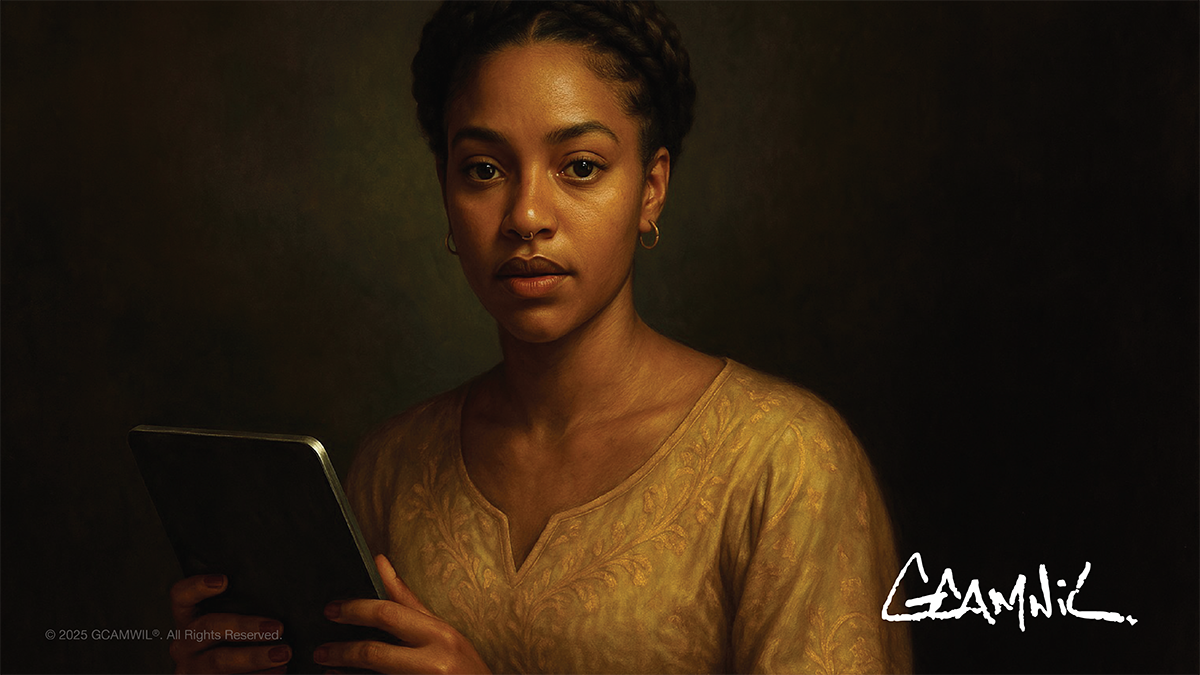
I remember the first time I mistook stillness for failure. It was the start of a new year, and the studio felt quieter than usual. The projects were paused, the metrics flatlined, the inbox mercifully still. To the part of me conditioned for motion, that silence felt like regression. I used to believe progress was something you could measure by how many things were moving at once. It took years to realize that stillness wasn’t a sign that nothing was happening—it was the sound of something recalibrating beneath the surface. Darkness isn’t the opposite of clarity. It’s where clarity is formed.
Most creators quit too early because they mistake disorientation for defeat. They assume the fog means they’re going backward when really, they’re being prepared to move differently. I’ve learned that every reinvention begins with blindness. You lose sight of what you were before you can see what’s next. The systems that once made sense stop fitting. The routines that once worked stop working. And the identity you wore like armor starts to feel like weight. What’s dying isn’t your ambition—it’s the structure that once held it. The dark isn’t punishment. It’s initiation.
Every era of my creative life began with that feeling of freefall. The months where clients paused, or income dipped, or the audience stopped reacting were never proof that I’d lost it—they were proof that something deeper was trying to emerge. The mistake most founders make is trying to outwork that darkness. They double down on productivity, schedule meetings, buy courses, chase movement. But darkness doesn’t respond to speed. It responds to stillness. The creator who learns to sit in uncertainty without scrambling is the one who emerges with new sight.
I call it the Digital Awakening Map—a process that mirrors every evolution I’ve lived through as an artist and builder. Stage one is Disorientation—when the old systems collapse and your compass spins. Stage two is Reflection—when you begin to name what died and why it needed to. Stage three is Reconstruction—when you start to design from clarity instead of habit. Most people never get past the first stage because they panic and try to rebuild before they’ve understood what actually fell apart. But sovereignty requires patience. It demands you trust that the map is being redrawn in real time, even when you can’t see it.
Last year broke a lot of creators. Not because they lacked skill, but because the rhythm of the internet changed and they were still trying to play by 2020’s rules. Algorithms shifted. Attention spans fragmented. But the deeper change wasn’t external—it was energetic. People stopped resonating with noise. They started craving substance, depth, and signal. For those who couldn’t adapt, the darkness felt endless. But for those who listened, the silence became an invitation. The creator who survives the algorithm isn’t the one who posts more. It’s the one who builds slower, truer, from the inside out.
In my own life, I’ve learned that clarity rarely arrives with fanfare. It seeps in quietly—during the walk after a long day, the late night at the desk when nothing seems to land, the moment you stop forcing a plan. That’s when the next version of you starts to speak. Sometimes it’s just a whisper: change direction, rest, let go. It’s easy to ignore that voice when you’re addicted to momentum. But I’ve come to treat that silence as a command. When the world stops moving, it’s because you’re meant to hear yourself again.
I used to fear reinvention. Now I design for it. Every system I build has space for uncertainty baked in. The workflows, the creative calendars, even the financial models—they’re not cages, they’re scaffolds. They’re designed to hold structure while allowing change. This is the secret of creative sovereignty: your systems are not there to control you. They’re there to free you from decision fatigue long enough to think clearly. Every creator needs at least one ritual that grounds them when the fog returns. For me, it’s journaling in the early morning, before the world starts making noise. That’s where I locate the signal again.
Darkness exposes dependency. It shows you where you’ve been outsourcing validation—metrics, likes, clients, deadlines. When all that fades, you’re left with a mirror. The question isn’t “What do I do next?” It’s “Who am I without motion?” For me, the answer always arrives in layers. First, the artist who creates without audience. Then the architect who rebuilds the system. Then the sovereign who knows both roles are the same. Once you see that, you stop fearing the dark altogether. You start using it as fuel.
The truth is, most of us are afraid of the quiet because it reveals how noisy our thinking has become. But that’s also where the best work begins. The internet will tell you to pivot, rebrand, optimize, produce. But sometimes the highest leverage move is to close the tabs, power down the dashboard, and walk into the fog on purpose. That’s where the signal lives. The next version of your work won’t come from the algorithm. It’ll come from the silence you’ve been avoiding.
When I look back at every turning point in my journey, the pattern is obvious. Each collapse disguised as failure was really an upgrade in disguise. The studio that slowed down made room for strategy. The brand that lost traction made space for truth. The project that fell apart created the bandwidth for something better. The darkness is always the invitation to begin again, but this time with more awareness. You don’t escape it. You integrate it.
If you’re reading this and you’re in that phase—foggy, unsure, halfway between versions—remember this: you’re not behind. You’re incubating. Don’t rush to fill the void. Let it echo. Journal your confusion. Name what’s fading. Map what no longer fits. Because the dark isn’t here to punish you. It’s here to prepare you for the light you’re about to handle.
So breathe. Sit still. Let your nervous system catch up with your ambition. You don’t need to fix the dark. You need to understand it. Because once you do, every lost season becomes a training ground for vision. Every pause becomes preparation. And every quiet moment becomes proof that you were never lost—you were just in the dark, learning how to see again.
Garett
PS: Know someone who would benefit from this? Send them this link → subscribe.garettcampbellwilson.com
Want more insights on mastering the creator economy? Follow me on Instagram @gcamwil and stay updated on the latest strategies.
Start Here: The Digital Renaissance Manifesto
The system wasn’t built for creators. The traditional career path is collapsing, and the future belongs to those who create, not just those who comply. But how do you transition from being trapped in the old system to thriving in the new one?
That’s exactly what I break down in The Digital Renaissance Manifesto—your essential guide to understanding how creativity, technology, and ownership are merging to create the biggest wealth shift of our time.
Read The Digital Renaissance Manifesto – If you’re ready to stop trading time for money and start building leverage, this is where you begin.
Keep Learning: Related Reads
- YOU DON’T NEED A PERSONAL BRAND. UNTIL YOU NEED ONE.: How to package your knowledge, point of view, or process into digital assets that don’t expire when your shift ends.
- HOW TO TAP INTO THE WEALTH TRANSFER NO ONE TALKS ABOUT: There’s a silent wealth transfer happening. It’s happening in human attention.
- THE 9 TO 5 IS DEAD. NOW WHAT?: Why some are waking up to the fact that relying on a single employer for financial security is too risky.