
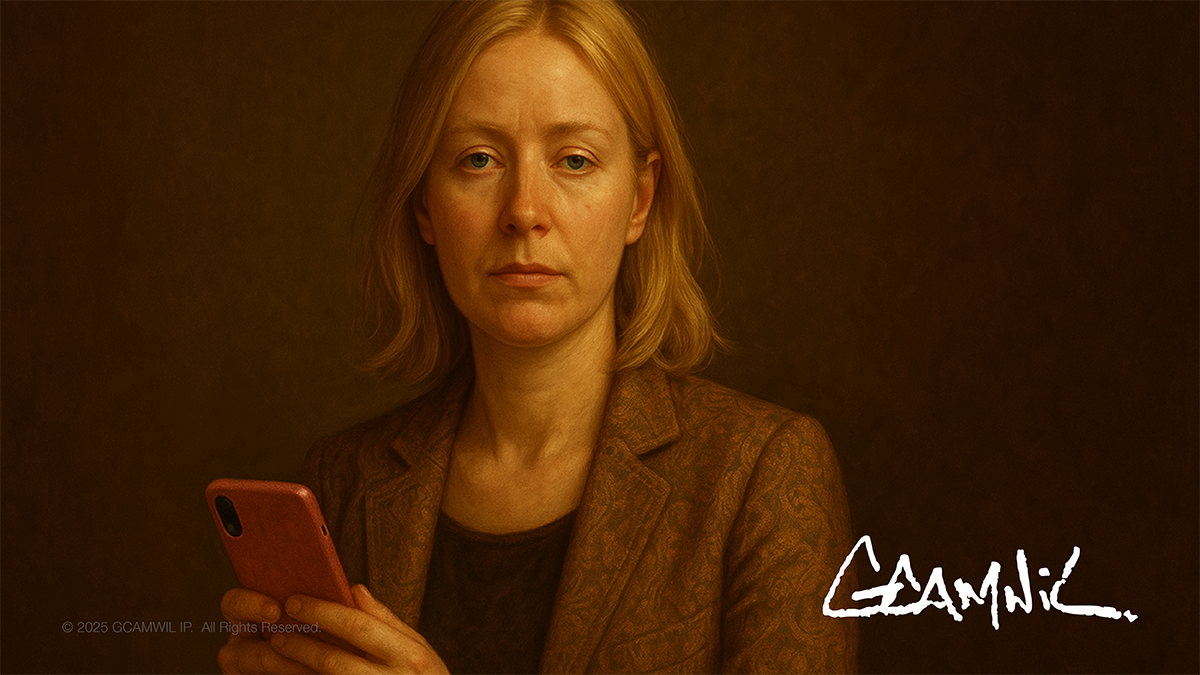
The midpoint of the year always arrives quietly. It never announces itself with fireworks or clarity. It just appears one morning, halfway through your coffee, and whispers the question most people avoid: What have you actually built? Not what you’ve produced. Not what you’ve posted. What have you built. There’s a difference between motion and momentum. One drains you. The other compounds. Most creators mistake the two until the fatigue catches up and the applause fades. That’s when the mid-year audit begins—not on paper, but in the mirror.
I used to treat June like a second January. New plans, new projects, new energy. But after a decade of cycles, I realized I didn’t need new. I needed clarity. Most of us are not underperforming; we’re overperforming in the wrong directions. Every “yes” to something misaligned is a “no” to something that would have compounded. It’s not laziness that kills momentum. It’s fragmentation disguised as productivity. The truth is that high performers burn out not because they don’t have enough fuel, but because they’re pouring it into holes instead of engines.
Builder Mode and Performer Mode look almost identical from the outside. Both are busy, disciplined, and impressive in short bursts. But one compounds, and the other consumes. Performers chase immediacy—engagement, visibility, validation. Builders chase permanence—systems, equity, peace. Performers win attention cycles. Builders win freedom cycles. I’ve been both. The Performer in me was addicted to proof. The Builder in me wanted legacy. Only one survives the quiet seasons when no one’s watching.
Around mid-year, I always feel the pull to evaluate not what I’ve done, but what’s still working when I stop pushing. Systems reveal truth faster than ambition ever will. If something only grows when you force it, it’s not sustainable. If it keeps compounding when you step back, you’ve built correctly. That’s why I stopped chasing performance metrics and started auditing system integrity. How many of my systems were still producing without my presence? How much of my energy was being traded for visibility instead of value? Those questions built my company more than any business plan ever did.
There’s a subtle arrogance in performance. It tricks you into thinking you’re building momentum when you’re really just building tolerance for chaos. I’ve learned that exhaustion isn’t always a sign of overwork—it’s often a sign of misalignment. Performers crave recognition because it fills the void left by lack of conviction. Builders don’t need recognition because they’re too busy reinforcing conviction. When you’ve done the work to anchor your systems, applause becomes irrelevant. The work speaks in compound interest, not claps.
Most creators operate inside loops they never designed. They wake up and execute habits someone else modeled, post content someone else inspired, and measure success by someone else’s metrics. The mid-year audit isn’t about optimizing your output—it’s about reclaiming your operating system. It’s about asking whether the structure you’re running on actually belongs to you. When I did that the first time, I realized half my routines were inherited, not chosen. I was following success patterns that rewarded speed, not sovereignty. So I rebuilt. I deleted entire projects. I downsized offers. I protected silence like equity.
Every builder eventually faces a season where stopping feels like failure. You’ll mistake stillness for stagnation until you realize that momentum without direction is just drift. I used to think scaling was proof of progress. Now I treat scaling like a privilege you earn through clarity. The more you scale, the more your distortions multiply. The mid-year audit forces you to confront what you’ve scaled that should have stayed small. It’s humbling. But humility is just another word for precision.
The audit isn’t just about numbers—it’s about narrative. Every metric hides a story. You can have growth that feels like decay and decline that feels like relief. You can lose followers and gain freedom. You can pause launches and find peace. Data tells you what happened. Reflection tells you what mattered. That’s why I always run two audits in parallel: one for systems, one for self. The first tracks output. The second tracks energy. When they’re aligned, you’re operating in Builder Mode. When they diverge, you’ve slipped back into performance.
By mid-year, I measure my life less by how much I’ve done and more by how calm I feel while doing it. Calm is the metric no one tracks because it doesn’t screenshot well. But calm is a sign of mastery. It means your systems are holding you instead of you holding them. It means the business isn’t just functioning—it’s protecting you. The most sovereign creators I know aren’t the loudest. They’re the ones whose empires hum quietly in the background while they move slowly and think clearly.
The hardest part of any audit is realizing how much of your identity is tied to being seen. Performers crave mirrors. Builders create windows. One reflects the self. The other expands perspective. When you let go of the need to be seen, you finally see what’s real. I used to think disappearing meant irrelevance. Now I see it as incubation. The work doesn’t die in silence—it matures there. Every system, every idea, every season of obscurity is an investment in compounding trust with yourself.
At this point in the year, most people reach for plans. I reach for pruning shears. Cutting is strategy. Discipline is deletion. If something hasn’t proven its compounding value by now, it doesn’t deserve space in the next six months. Half the year is gone—that’s not a warning. It’s a filter. The audit isn’t punishment. It’s preservation. You don’t need to reinvent your direction. You need to remove everything that blurs it.
This is where the Builder’s promise begins: to stay when the Performer would pivot, to refine when the Performer would announce, to choose peace over proof. The back half of the year is built by those who double down on systems, not schedules. Legacy doesn’t require a relaunch. It requires rhythm.
So as I sit at the midpoint, I’m not asking what I’ll do next. I’m asking what still deserves to grow. What compounding systems still hum without my supervision? What projects still light the same fire they did before the applause? And what have I been performing that no longer earns my energy? The answers decide how I’ll build the rest of the year.
If you’re reading this, stop chasing the next plan. Run your audit. Ask what would keep growing if you stepped back for a month. Protect that. Cut the rest. Builder Mode begins where performance ends. The mirror doesn’t lie—it just waits for you to look long enough to see the truth you’ve been avoiding.
Garett
PS: Know someone who would benefit from this? Send them this link → subscribe.garettcampbellwilson.com
Want more insights on mastering the creator economy? Follow me on Instagram @gcamwil and stay updated on the latest strategies.
Start Here: The Digital Renaissance Manifesto
The system wasn’t built for creators. The traditional career path is collapsing, and the future belongs to those who create, not just those who comply. But how do you transition from being trapped in the old system to thriving in the new one?
That’s exactly what I break down in The Digital Renaissance Manifesto—your essential guide to understanding how creativity, technology, and ownership are merging to create the biggest wealth shift of our time.
Read The Digital Renaissance Manifesto – If you’re ready to stop trading time for money and start building leverage, this is where you begin.
Keep Learning: Related Reads
- YOU DON’T NEED A PERSONAL BRAND. UNTIL YOU NEED ONE.: How to package your knowledge, point of view, or process into digital assets that don’t expire when your shift ends.
- HOW TO TAP INTO THE WEALTH TRANSFER NO ONE TALKS ABOUT: There’s a silent wealth transfer happening. It’s happening in human attention.
- THE 9 TO 5 IS DEAD. NOW WHAT?: Why some are waking up to the fact that relying on a single employer for financial security is too risky.