
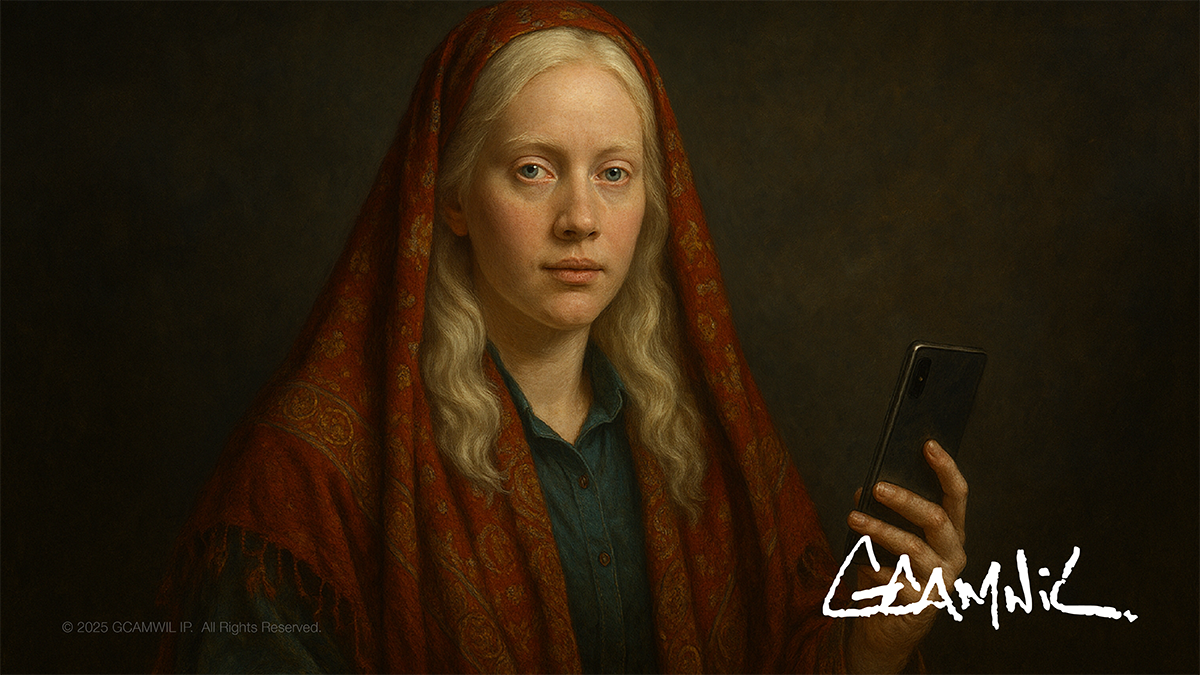
The first time I realized how the internet actually remembers people, it unsettled me. I typed my own name into the search bar, and what came back wasn’t a man—it was a pattern. A set of repeated moments, quotes, and aesthetics, stripped of context and condensed into something recognizable. That was the moment I understood the algorithm’s truth. Online, you are never remembered as a person. You are remembered as an archetype. The internet doesn’t archive nuance. It stores symbols. It takes your complexity, compresses it into narrative shorthand, and feeds it back to the world. The only question is whether you define that shorthand or let it define you.
I used to resist that reduction. I thought being misunderstood was an injustice. Now I see it as a design opportunity. Every era has its storytellers, and in the digital one, the algorithm is the most powerful of them all. It decides what fragments of you survive. It decides how you’re remembered. Once you see this, you stop fighting for accuracy and start building architecture. You learn that identity online isn’t about showing everything—it’s about reinforcing the right thing.
I began to think about how history remembers its icons. Not as full people, but as distilled symbols of specific traits. Steve Jobs became the visionary. Bowie the shapeshifter. Chanel the minimalist revolutionary. We reduce to remember. That’s how the human mind categorizes. Archetypes are the cognitive compression of memory. They’re shortcuts for significance. When you understand this, you can design your public identity not as a mask, but as a mirror—one that reflects a precise signal back to the culture you want to influence.
The trap most creators fall into is confusing authenticity with exposure. They think showing every version of themselves builds trust. It doesn’t. It builds confusion. The internet doesn’t reward complexity. It rewards clarity. The deeper your life becomes, the simpler your signal has to be. This isn’t inauthentic—it’s strategic. Every artist has layers, but not every layer belongs in public view. What makes a legacy coherent isn’t how much you share, but how consistently you share the core.
In the early years, my online identity was a collage. Bits of art, systems, reflections, business, philosophy. It was all true, but none of it was clear. Then I realized the people who built enduring brands weren’t the most talented—they were the most defined. They picked a lane, an archetype, and committed to it until the world caught on. It wasn’t limitation. It was discipline. Archetype isn’t a prison. It’s a framework. It’s how the world recognizes you across time.
Once I started studying the archetypal structure of public figures, I noticed the rhythm. Every great brand has a single dominant archetype that everything else revolves around. The Creator. The Sage. The Warrior. The Ruler. The Lover. You can blend them, but one must lead. That leading archetype becomes your digital signature. It determines how people interpret your silence, your speech, your imagery. If you don’t choose it consciously, culture will choose for you. And that default choice is rarely in your favor.
I remember rewriting my own brand document from scratch one night. I asked myself, “If someone only watched one video, read one line, or saw one image—what would I want them to remember?” That’s how you find your archetype. It’s not about what you do. It’s about what energy your presence installs in others. Once I found mine, everything else started to organize around it. Decisions became easier. Aesthetic choices aligned. Messaging felt natural again. I stopped trying to explain who I was and started embodying it.
Archetypal clarity has another hidden advantage—it protects your nervous system. When you operate from a chosen identity, you stop reacting to how people perceive you. You already know what signal you’re meant to transmit. This is how you build energetic boundaries in public. You’re no longer chasing perception; you’re maintaining position. That’s why alignment feels peaceful. It’s structure disguised as confidence.
Online memory is built like sediment. Layers of content compress into a single image over time. The comments, the interviews, the visuals—they all blend into a gestalt impression. That impression becomes your myth. You can’t control how every fragment lands, but you can control the theme that holds them together. That theme is your archetype. The danger isn’t being misunderstood once—it’s being remembered incoherently forever.
When you start designing your digital archetype, think of it like world-building. Everything you release is part of your canon. Every post, every quote, every project becomes an artifact. Consistency turns those artifacts into evidence. Over time, people stop asking who you are. They start repeating it back to you. That’s when you know the archetype is installed.
I saw this happen firsthand. A year after I refined my positioning, I began to notice strangers describing me in almost identical phrases. They weren’t quoting me—they were echoing the system. That’s the power of clarity. The internet mirrors whatever you repeat with conviction. The mistake most creators make is changing too often. They treat every new season like a reinvention. But culture doesn’t follow reinvention. It follows repetition. Reinvention without anchoring looks like confusion. Repetition with precision becomes mythology.
The internet’s memory is mechanical, but its emotion is human. It remembers patterns, but it believes stories. Archetypes are the bridge between the two. They translate data into meaning. When people say your brand has a “vibe,” what they really mean is that your archetype is consistent enough to feel alive. That’s what gives digital identity soul. Without that through-line, everything you post just dissolves into noise.
The more I leaned into this concept, the freer I became. I didn’t need to share every thought anymore. I needed to reinforce the archetype through structure. That meant tightening language, refining visuals, and being deliberate about how often I showed up. Paradoxically, the less I shared, the stronger the signal became. Silence, when aligned with archetype, amplifies power. You become predictable in energy but unpredictable in timing. That’s how mystique works.
Archetype also dictates longevity. People don’t age out of archetypes—they evolve within them. When you design your brand through this lens, you build for decades, not months. The Creator matures into the Sage. The Warrior becomes the Guardian. The Lover evolves into the Muse. Every stage becomes a new chapter in the same myth. That continuity is how legacy is built online. Your followers might change, platforms might die, but your archetype carries you through every iteration.
In this way, archetype is both anchor and amplifier. It holds you steady while multiplying your reach. It ensures every collaboration, product, or piece of content feels like part of the same universe. That’s how Disney built an empire. That’s how musicians become movements. The archetype is the seed that grows the entire forest.
Creators often underestimate how literal digital memory is. The algorithm doesn’t interpret intent—it indexes patterns. So if your archetype isn’t clear, your data works against you. It categorizes you under the wrong archetype and reinforces the distortion through recommendations. That’s how creators end up trapped in boxes they never built. But the ones who design their boxes consciously end up turning them into cathedrals. Structure isn’t constraint. It’s liberation.
I’ve learned that every piece of content either installs belief or creates confusion. Nothing is neutral. That’s why every post now passes through one filter: does this reinforce the archetype? If it doesn’t, it doesn’t go out. Discipline builds density. Over time, the brand becomes magnetic. The audience starts finishing your sentences because they’ve internalized your rhythm. That’s how mythology works—it moves from your mouth to their memory.
Building an archetype isn’t about crafting a persona. It’s about crystallizing essence. It’s the art of designing what will remain when you’re gone. Because one day, the only version of you that will still exist is the one the internet remembers. That version is already forming. Every caption, every visual, every silence contributes to it. The question is whether it’s coherent.
There’s a strange peace that comes when you accept that you can’t control interpretation—but you can control intention. I no longer fear being reduced to a single archetype. I see it as efficiency. The world needs shorthand to understand you. Give it the right one. Make it simple, strong, and sacred. When you do that, every algorithm becomes an ally. Every memory becomes a monument.
In the end, legacy online is not built by trying to be everything. It’s built by being one thing completely. The internet doesn’t remember complexity. It remembers conviction. And conviction looks like clarity repeated over time.
So audit your digital presence. Study what pattern people associate with you. Then ask the real question—does that archetype match who you actually are, or have you been performing someone else’s story?
Define it now. Refine it through repetition. Protect it through silence.
Because the internet will remember you one archetype at a time. Make sure it remembers the right one.
Garett
PS: Know someone who would benefit from this? Send them this link → subscribe.garettcampbellwilson.com
Want more insights on mastering the creator economy? Follow me on Instagram @gcamwil and stay updated on the latest strategies.
Start Here: The Digital Renaissance Manifesto
The system wasn’t built for creators. The traditional career path is collapsing, and the future belongs to those who create, not just those who comply. But how do you transition from being trapped in the old system to thriving in the new one?
That’s exactly what I break down in The Digital Renaissance Manifesto—your essential guide to understanding how creativity, technology, and ownership are merging to create the biggest wealth shift of our time.
Read The Digital Renaissance Manifesto – If you’re ready to stop trading time for money and start building leverage, this is where you begin.
Keep Learning: Related Reads
- YOU DON’T NEED A PERSONAL BRAND. UNTIL YOU NEED ONE.: How to package your knowledge, point of view, or process into digital assets that don’t expire when your shift ends.
- HOW TO TAP INTO THE WEALTH TRANSFER NO ONE TALKS ABOUT: There’s a silent wealth transfer happening. It’s happening in human attention.
- THE 9 TO 5 IS DEAD. NOW WHAT?: Why some are waking up to the fact that relying on a single employer for financial security is too risky.