
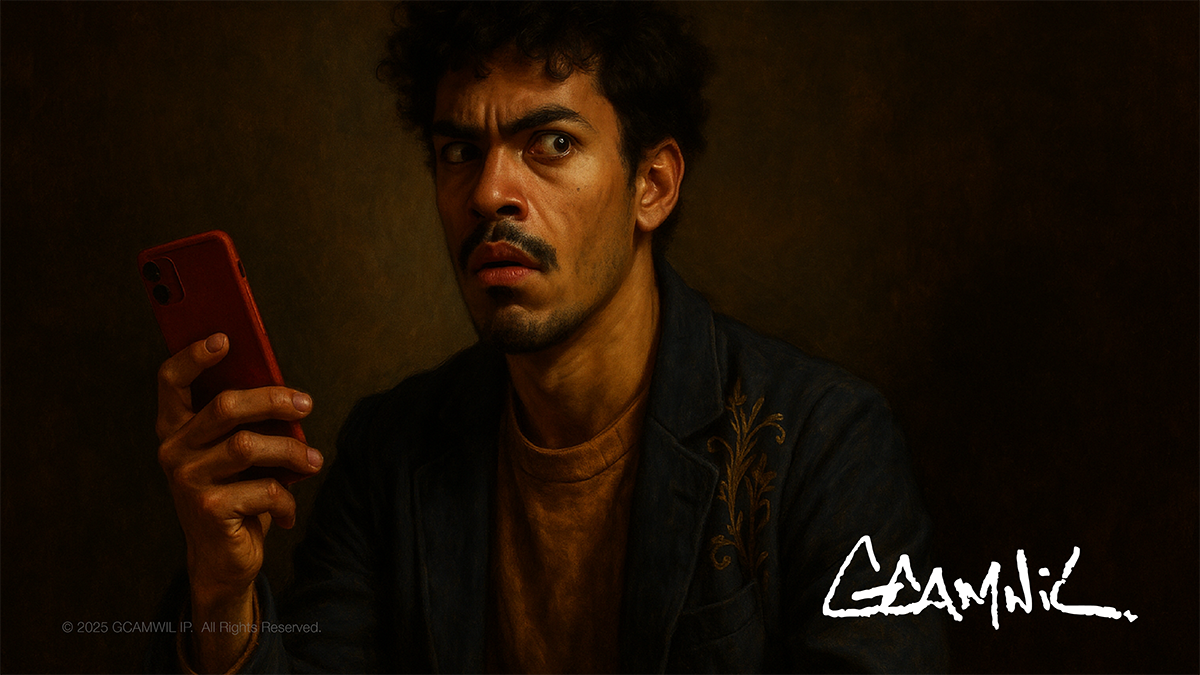
The moment arrived without ceremony. Someone asked me to explain what I was doing, and the language failed. The system worked in my hands, but the words would not hold it. What I offered instead was gesture, shorthand, implication. It sounded convincing. It was not sufficient.
I recognized the pattern immediately. Execution had been doing the heavy lifting. Intuition had been filling the gaps. As long as I was present, the structure held. The request to explain removed me from the equation, and the weakness became visible.
Knowledge that cannot be transferred is not complete.
It is only familiar.
That realization recalibrated everything. I stopped trusting fluency as evidence of understanding. I started watching what survived translation. The line between knowing and performing became impossible to ignore, and I could not step back across it once I saw it.
Results can be misleading. They often arrive before comprehension does. A system can function inside one person long before it can survive outside them. That gap is rarely noticed while execution is working. The moment explanation is required, it becomes impossible to ignore.
Intuition is efficient but private. It compresses decision-making without exposing its steps. As long as the originator remains present, the work holds together. Remove that presence and the structure reveals whether it exists at all. This is why execution alone cannot be trusted as proof of understanding.
Most creators mistake fluency for ownership. They speak easily about what they do and assume that ease reflects clarity. In reality, fluency often masks unresolved complexity. The words move quickly because they are not carrying load. When pressed to translate the process, the gaps surface.
Teaching introduces friction by design. It removes instinct and demands sequence. The idea must move from internal recognition to external coherence. Every missing step becomes visible. Every assumption is exposed. What survives that exposure earns legitimacy.
This is where false mastery collapses. Not because the person lacks intelligence, but because the system was never stabilized. It existed as behavior, not architecture. Teaching does not punish this. It reveals it. That revelation is not a setback. It is a diagnostic.
Translation is the actual skill. Not knowing the thing, but rendering it usable by another mind. This requires precision without excess. It forces the creator to decide what matters and discard what does not. Teaching is design work under constraint.
Confusion becomes data. Each moment of misunderstanding points directly to structural weakness. Where the listener hesitates, the method lacks clarity. Where the explanation grows defensive, ownership is incomplete. Teaching strips away comfort and replaces it with truth.
Over time, this process reshapes the creator. Thinking becomes modular. Ideas are formed with transfer in mind. The question is no longer whether something works, but whether it can be explained without presence. That shift changes how systems are built from the start.
Authority recalibrates here. Loud confidence becomes irrelevant. What matters is whether the system holds without performance. The creators who endure are not the most articulate. They are the most precise. Their work does not require defense because it can be handed off intact.
Teaching also dissolves ego. It removes the illusion that insight belongs to the one who discovered it. Once transferred, the idea proves whether it was ever real. What cannot survive translation was never owned. It was merely familiar.
This is the pressure point where understanding either consolidates or collapses. There is no workaround. No amount of reputation compensates for failed transfer. The method either survives outside you, or it does not exist yet.
That is the line that decides everything.
There is no mystery left in this for me now. The gap always appears in the same place. The moment someone asks you to explain the thing you claim to know. What follows tells the truth immediately.
Execution can hide incomprehension for a long time. Results can disguise the absence of clarity. But teaching removes all camouflage. It forces the idea to walk without your instincts carrying it. Whatever collapses in that moment was never owned.
Understanding reveals itself in transfer.
Nothing else qualifies.
When the system can be handed to another person and still produce coherence, the work is finished. Until then, it remains private intuition dressed as expertise. That distinction matters more than confidence, reputation, or experience ever will.
I no longer confuse mastery with performance. The ones who truly understand move quietly. They design their thinking so it can survive outside themselves. What cannot be taught does not belong to you yet. It is still borrowing your presence to function.
That line has never failed me.
Garett
PS: Know someone who would benefit from this? Send them this link → subscribe.garettcampbellwilson.com
Want more insights on mastering the creator economy? Follow me on Instagram @gcamwil and stay updated on the latest strategies.
Start Here: The Digital Renaissance Manifesto
The system wasn’t built for creators. The traditional career path is collapsing, and the future belongs to those who create, not just those who comply. But how do you transition from being trapped in the old system to thriving in the new one?
That’s exactly what I break down in The Digital Renaissance Manifesto—your essential guide to understanding how creativity, technology, and ownership are merging to create the biggest wealth shift of our time.
Read The Digital Renaissance Manifesto – If you’re ready to stop trading time for money and start building leverage, this is where you begin.
Keep Learning: Related Reads
- YOU DON’T NEED A PERSONAL BRAND. UNTIL YOU NEED ONE.: How to package your knowledge, point of view, or process into digital assets that don’t expire when your shift ends.
- HOW TO TAP INTO THE WEALTH TRANSFER NO ONE TALKS ABOUT: There’s a silent wealth transfer happening. It’s happening in human attention.
- THE 9 TO 5 IS DEAD. NOW WHAT?: Why some are waking up to the fact that relying on a single employer for financial security is too risky.